

Fire detection and suppression systems Fire alarm and suppression systems are among the most important fire-safety equipment in buildings and are essential during fire-related incidents and emergencies. As their name indicates, fire alarm and suppression
Fire alarm and suppression systems are among the most important fire-safety equipment in buildings and are essential during fire-related incidents and emergencies. As their name indicates, fire alarm and suppression systems consist of two types of systems. Alarm system The alarm system informs and warns people at the location, while the suppression system controls and extinguishes the fire. Below, we provide a complete definition of fire alarm and suppression systems.
Fire alarm systems use sensors and detectors to identify heat and smoke. As soon as a sensor is activated, an alarm sounds so people at the location can quickly take initial action. Installed sensors detect heat and gases exceeding normal thresholds and quickly activate visual and audible warning devices installed in the equipment.
Fire alarm and suppression systems are building-safety equipment used to prevent fires and control them in buildings.
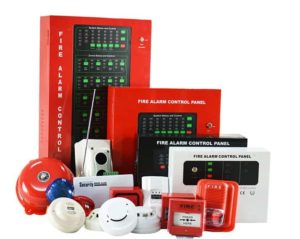
Compared with many other types of firefighting equipment, fire alarm and suppression systems have a more general role and are mandatory in many buildings, centers, companies, and similar facilities. For roughly the past decade, municipal authorities have required newly constructed buildings to have standard fire alarm and suppression systems, with construction approvals issued after inspection by the relevant expert.
As a result, many companies now offer this equipment at different quality levels.
“Conventional” means that when a fire occurs somewhere in a building, the central control panel cannot identify the exact point where the fire started. For example, in a building with several rooms, a kitchen, and restrooms, all equipped with a fire alarm system, if a fire starts in one room, a conventional control panel reports the fire and the relevant building-wide alarm/suppression response may be triggered. This type of system is commonly used in buildings with a lower budget allocated to fire alarm and suppression equipment.
As its name suggests, an addressable system identifies the exact address and location of a fire and activates the affected area without unnecessarily triggering all suppression systems. For example, imagine a large library with many shelving sections. If a fire occurs in one section, the central control panel should quickly identify the exact fire location and activate the suppression system for that specific area, helping prevent unnecessary damage to other library sections where no fire occurred. This type of system is generally used in locations and buildings willing to invest more to protect valuable data, documents, or assets.
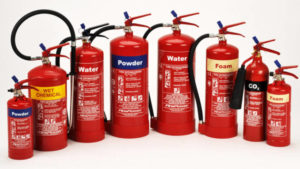
A fire suppression system is designed to extinguish fire and stabilize and control the temperature of the environment, and is one of the most widely used safety systems in buildings. This can be achieved in several ways, as described below.
CO2: using carbon dioxide gas to extinguish fire
Water: In critical situations where open flames are present, water may be used for extinguishing.
Nitrogen: Nitrogen can be used in a pre-action approach, entering the protected space before fire or heat significantly affects it and helping control temperature. Such systems are used in specialized locations such as libraries or facilities storing highly important documents, because their cost is significantly higher than many other systems.
There are five main types of fire suppression systems, selected according to the size and capacity of the project.
Gas-based systems store the extinguishing agent in liquid form and use nitrogen for pressurization. Nitrogen is kept compressed in the cylinders, and when temperature exceeds the threshold set for the sensors, the suppression operation begins.
The extinguishing agent in this type of system is a chemical foam or wet-chemical agent (such as Amerex, Ansul, etc.), designed specifically for commercial kitchens.
As the name suggests, this system sprays water or an extinguishing solution in the form of a fine mist. Water is stored in a tank and pressurized through hoses in a high-pressure chamber, then sprayed as a mist over the heat source to prevent further temperature rise.
This fire alarm and suppression system operates similarly to a water-mist system, but uses foam instead of water as the discharged extinguishing agent. Foam-based fire suppression systems are expensive and are used for special applications such as archives, document repositories, and libraries where fire can cause severe damage.
There is a specialized type of fire alarm and suppression system that can also be categorized among pneumatic safety equipment.
It uses a special plastic tube wrapped around pipes carrying chemicals. If a chemical leak occurs, the tube reacts immediately and, through the materials used in its construction, helps prevent excessive temperature rise and reduce the chance of fire.



